Monday, June 1, 2015
Finals: An End of Year Reflection
Overall, I'd say that this year has been a pretty stressful year- American Studies is by far the class that I'm most sad to see go, though. It's definitely the highlight of my school day, a class where you're actually rewarded for talking! Junior year schoolwork hasn't been kind to me (Nor most, I would think) in terms of allowing me proper amounts of sleep and socialization. This seems to be a New Trier ritual year though, and we get the freedom of being seniors after it ends, which is nice to think about. After which, of course, I'm off to college (presumably, gap year may be included). I've written a fair bit on the educational system and structures on this blog here, and it's certainly an aspect of pride that I've survived New Trier's grueling junior year. I'd like to think that I developed as a person during this year, and especially during this class. I know for a fact that I learned how to make sick powerpoints, as well as picked up some new author names I hadn't heard of before. It was the first time I'd had a lot of the discussions that we did in a classroom setting, which provided an interesting new perspective on it. Regardless, it was certainly a fun time, and provided a much needed respite from the horrors of Math.

Sunday, May 24, 2015
Ireland: Green & Rainbow

Ireland is a historically conservative country, never really pointed at as a shining beacon of progressiveness by...well, pretty much anyone. That is up until now. Very recently, Ireland has overwhelmingly passed a democratic vote to allow gay marriage, landing them as the first country to do so in the world. Now, while this is amazing and all, I'm sure you're wondering "Hey, this is a blog about America, what's it got to do with that?" Good question, you! See, Irish-American ties have historically been a lot stronger than most countries, at least culturally. The sheer amount of Irish Americans around have seen to that (Myself being one of them). Much as Irish traditions spread over to the US, it's my hope that this new wave of tolerance does as well.
Thursday, April 23, 2015
Memetic Futures
The
internet, though a wonderful tool in many aspects, has brought quite a few interesting
twists (to say the least) to western society. It’s sped up communications to
the point of instantaneous transmission, leading to what used to be considered
only time enough for a rush-job into perfectly adequate time for completing an
assignment or project. Though this has obvious implications for business and
other more formal aspects of our li(v)es, the effect that I’d like to focus on
is that of our culture. Internet culture is a thing now, and despite growing up
with it it’s still confusing and surprising to myself now and then. However,
one of the most prevalent things that internet culture has created is the
“meme”, usually an image or phrase that communicates an idea that is usually
imbued with humorous connotations then.
These memes used to become popular
through a few image-boards, posting them and then making fun of how simplistic
or counter-intuitive they were, or even just some mildly funny aspect of it
that was blown way out of proportion to make it ironically humorous. The latter
portion of this is where the seeds for the present were sown, in shameless
irony. Back before the turn of the decade, memes were generated at a relatively
low rate, perhaps a new one popping up every few weeks, maybe once a week if it
was a really sizzling day. These elder-memes would be posted with frequency at
the time of origination, but then quickly toned down until it became one of the
whole pool of memes, never being over-used or relied upon to create a punchline
in and of itself. Around 2012 though, that all started to change. Memes were
suddenly being produced at a much higher rate, the internet catching onto the
idea of them and having quite a blast while doing so. For a span of a few
years, the web kept churning them out at ever increasing speeds- until it
started to leak.
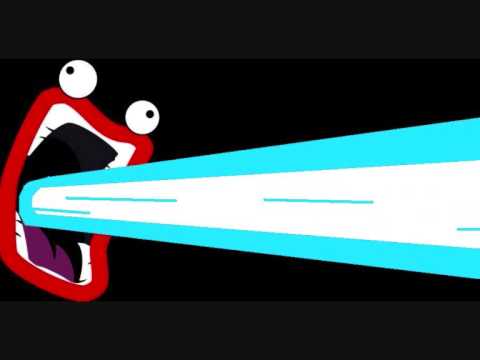
One of the earlier memes, Shoop da Whoop, based on a Dragonball Z parody
Suddenly, brands and stores started to sell and produce
physical copies of memes, be it on clothing or other items. The internet’s meme
culture was seeping out into the real world, and this led to only more memes
being created. The whole internet was swept into a veritable meme-frenzy,
producing dozens a day and posting them everywhere it could. The lifespan of a
meme’s originality and humor was no longer months or even years, it became days
if not hours. The natural progression of this would be for the dead horse to
just be buried and done with it, but then irony crept into the mix.
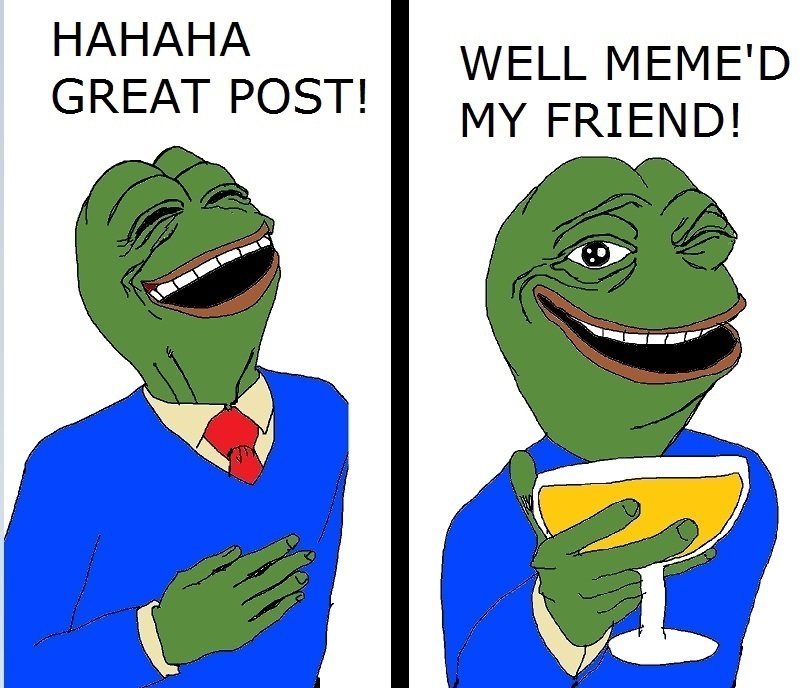
This too spilled over, reaching what I would consider to be a boiling point when someone ironically spent 5000$ on purchasing “rare pepes” from a seller on ebay (or even more, though this bid likely didn't go through)- images of a poorly-drawn frog that were considered funny just due to the irony attached with posting them. An ironic purchase of an ironically ironic image that was put up for sale ironically in the first place. Proof of purchase was then posted ironically on many sites, making people ironically laugh at the expenditure of cash. That’s six layers of irony, in case you weren’t counting. At some point, this has to reach a point where it can’t sustain itself. The ironic tirade will have to crash and burn at some point, as we’re quickly approaching just laughing at the concept of irony itself. So what will the future hold for internet culture, and the real world culture that it’s slowly but surely osmosing into? Only time will tell, but I sure hope it won’t be ironic.

Saturday, April 18, 2015
The Surveillance State Part 4: A Watchful Eye

Friday, April 17, 2015
The Surveillance State Part 3: Pragmatic Problems

Okay, so we've already covered that the NSA has been attaining absolutely MASSIVE amounts of data and information on everything than everyone's doing in the US- and abroad too (Lookin' at you, Merkel). This begs the obvious question of what they're going to do with all of this data...And of course the response given by the NSA is that they're going to be using it to fight off the terrorists. Specifically the brown ones with the turbans, but those are randomly selected of course. Be that goal as it may, it could seem obvious how surveillance techniques would help. If we collected data on the terrorists and learned what they were plotting, obviously we could implement countermeasures to protect against a second 9/11 from occurring...right? Well, it's not as idyllically simple as that, unfortunately enough. The reason why the NSA is collecting so much data is because they can't be sure if any one little bit is the next clue to a terrorist attack. However, this means that they need to sift through all of the data in order to find this, and they only have a vague idea of what they're looking for. It's like searching for a needle in the Saharan desert, except the needle may not even exist in the first place. This work requires and incredible amount of manpower that the NSA only has a fraction of, leading to the vast amount of data either never being processed and simply shoved into the backfiles or being looked at months after it was ever relevant. This inept phenomenon is called information overload, and it's happening as I type this out right now. It's clearly not working, so why does the NSA continue to chug along? Find out next time, as the junior theme crusade continues...
Thursday, April 16, 2015
The Surveillance State Part 2: Surveillance in Modern Day America
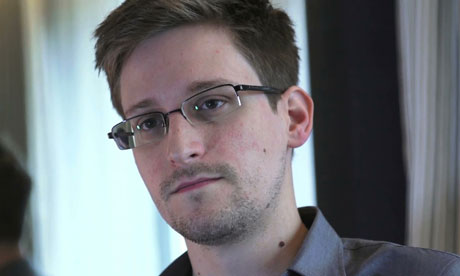
There can't be any discussion of modern day US surveillance practices without name-dropping Ed Snowden at least once. He was really the first major whistle blower on the NSA in the information age, offering an insight into the inner workings of the surveillance-machine that most Americans didn't even know was working behind the scenes. He provided thousands of government documents to back up his claims as well, shifting the discussion about surveillance from one characterized by hypothetical scenarios to one of facts. The amount of data being collected was huge- But wait, that's not the right word to use. See, this was one of the things that Snowden revealed, is that almost every word used by the NSA in press releases and congressional interviews is specifically defined within NSA legal code. Data can only be considered "collected" if a human eye has looked over it. Operating on a more common-sense definition of collection, the NSA has attained billions of times the amount of data they say they've collected. Using various broad sweeping programs and tools such as dragnets, the NSA operates under a collect-it-all mentality in this modern day and age, sifting through the data afterwards. There are quite a few problems with this approach, which will be addressed in the next post in this mini-series...
Wednesday, April 15, 2015
The Surveillance State Part 1: A history of surveillance in the US

The US's relationship with surveillance is something that has always been tumultuous. Going as far back as the splitting of our nation from the redcoats, the independence movement had meetings in secret so as to avoid the watching eye(s) of the British empire. That was back when the US was the underdog though, and didn't benefit from being the one on the other side of the looking glass. Fast forward a few centuries, and you get US government gleefully wiretapping suspected mafia and mob members, attempting to get the evidence that they needed to throw them in jail- Which they did, of course. This successful usage of new surveillance technology made it more apparent to the government that this was something that they could use in more ways, culminating in the Watergate scandal that every other scandal seems to be suffixed with today. This was still back in the 1970's though, when public opinion of surveillance was horror instead of apathy. Nowadays...well, that's going to be in the next post in this junior-theme extravaganza.
Wednesday, February 18, 2015
Don't Pass Go, Don't collect 200$
Obama's known as a president who isn't shy on issuing
executive orders. Executive orders are essentially bills that don't have to go
through congress that have basically the same authority, though congress can
veto an executive order with enough support (or lack thereof depending on whose
side you're on). The advantages of executive orders are quite obvious- they get
past the intentional deadlock that is the United States Federal Government and
get things done. However, the question that's posed then is when is one of
these XO's justified? According to Judge Andrew Hanen , not this time. In a
case about Obama's recent immigration XO surpassing his authority, 26 states
collectively sued Obama in federal court. The Judge deemed that it was indeed
an overstepping of Obama's boundaries, which resulted in the program being
indefinitely paused. The outcome of this suit is that the upset states can now
continue on to sue further, to get the program shut down forever.
Do you think that Obama's XO was an acceptable usage of his
authority?
Thursday, February 12, 2015
AUMF: Authorized Usage of Military Force
ISIS/ISIL has been quite the hot topic as of late in both
the mass media and the offices of many important political leaders of our
country. The behavior of this group is absolutely horrific, obviously, but
there's something just a bit unsettling the way the media has been portraying
them to me. The rhetoric routinely used about how the US needs to protect
itself and its interests by going in there and beating up the bad guy is being
repeated by so many news organizations that the question has no longer become
"Should we invade?" but instead "How much should we
invade?" This is further replicated in national politics by Obama's recent
request for congress to authorize strikes against the so-called Islamic State.
The reason that this is somewhat problematic for me is two-fold: First, it
falls back upon terrorist rhetoric, and secondly it assumes that the correct
thing for the US to do is to invade another country(ies).
The word terrorist is quite a fickle one. Everyone assumes
that they know what classifies someone as a terrorist, but no one's really
ready to defend that definition. We jump to slap the the label of terrorist on
any extremists in the middle east, but you only get wide-eyed stares when you
suggest that the US government's actions might just be terrorist-esque as well.
Yet, when asked what makes a terrorist a terrorist, the usual definition is
just someone who uses terrorist activities to forward a political goal. US
foreign policy, specifically in the middle east, has oft inspired and caused
terror along the people there. I mean hell, there are kids there who are afraid
of blue skies due to US drone strikes.
The result of this implicit double standard is an uneven portrayal of violent
state-based actions. Furthermore, the US's terrorism is "justified"
by targeting those who we call terrorists in the middle east. This logic seems
to suffer a lack of any sense of objectivity, only feeding the state war
machine.
Speaking of war machines: Holy shit, US middle eastern
policy. America has been involved in middle eastern domestic politics since
1949 when it supported a coup in Syria, and we've had troops continuously in
there for longer than I've been alive. Despite this lengthy invasion, it rarely
affects US domestic life (Arguably in no meaningful way since 9/11). This is a
part of the reason that this
never-ending sequence of wars continues to rage on. Another aspect of it
is that US intervention in other countries is no longer something that citizens
(and the world) are shocked by. It's become the status quo- it's more abnormal
if the US doesn't have it's hand in some other country's cookie jar. And in my
humble opinion, a country where we're constantly bombing other places in the
world doesn't exactly sound like the shining city on a hill.
Tuesday, February 3, 2015
America 4 lyfe

With the "big game" having taken place pretty
recently, I (and every red white and blue blooded American) am still buzzing on
the high of having my favorite team win- the Patriots. Though it may or may not
have come down to a terribad decision by a certain coach in the last crucial
moments, that's not what I want to focus on in this post. We all clearly know
the furor and zealotry that occur around this special American event, but that
raised the question in my mind- Why do we glorify this event so much?
After thinking about it for a while, I narrowed it down to a
couple causes. First and foremost is the fact that corporations benefit greatly
from having a high concentration of Americans watching a single program. For
advertising purposes, it's a gold mine for these companies just due to the
sheer reach of the ads. This is evident in how ingrained the famed Superbowl
ads have become in our culture. Hell, I know some people who don't even watch
it for the game, but rather just to see the best that these mega-corps have
come up with. Secondly, I think that the feeling of belonging that emerges from
team sports is something that many people feel very cozy with. Major football
team fan-hood is, essentially, a tribal structure where we wave colors and
shout names of the team that we (usually arbitrarily) support. This allows
people to easily identify those who are "in" and those who are
"out" of their respective groups. Now, while not all people take
football as seriously as others (myself included), the feeling is still there.
I cheer on the Patriots despite only knowing about 2 of their players names,
tops.
Overall, it's not really about the sport itself. It's much
more centered around the culture surrounding it and the corporations pumping
money into it.
Thursday, January 15, 2015
The Accuracy of History
Finals are on the mind, and the American studies one is
certainly on mine. I've always loved writing essays, and I love philosophy, so
the two are often intertwined throughout my educational career. As such, when I
heard that the final was about the differentiation between fact and constructed
conceptions of history, I was stoked. I'd recently been dipping into Derrida's
works and his ideas. One that I've found to be particularly fascinating is his
conceptions on how accurately we can learn historical events. There isn't any
real "truth" behind the historical accounts that we learn about,
given how we never lived through them. They're at best second hand recounts,
and usually much more distant than that. Every link on the chain to you adds
another filter of bias, predispositions, and slant to the image that is that
snapshot of history. Then, when it finally gets to you, it's no longer a pure
depiction of the event that took place. It's an image of an image of an image
of an image...etc. On the other side of this, I can't really think of a better
way to learn history. There is no real objective way, given the current
technology we have, to experience the past first hand. Thanks a lot, doc Brown.
Saturday, January 10, 2015
#JeSuisCharlie
The Charlie Hebdo attack was a horrific event. The lives of
all those lost were taken too soon, and for what purpose? Because they were
mentally ill? Perhaps it was due to a violent culture surrounding them? Was it
because they were Muslims?
No, no, and no. It's because they were assholes. The rest of
it, their religion included, are all just excuses and ideas used by them to
mask the real reason they did it. They were just assholes. Going around and
pointing fingers at all muslims, or all people with brown skin doesn't do
anything to address the issue of assholes being assholes. In fact, it only
generates more assholes. Spreading bigotry and religious discrimination does
nothing but allow assholes to find new reasons and flags to wave, causes to
point to as they continue to carry out their terrible deeds.
Wednesday, January 7, 2015
Tokenism and Diversity
TV tokenism, as we've been discussing in our American
Studies course, is an issue that plagues the most popular modern media. The way
I see it, the issue stems from the noble-hearted, but ill thought-out diversity
initiative pushed forward by the networks, cable, and all the other little
special snowflake channels. The problem I have with it is that it makes these
TV programs (Along with many other aspects of life in our western society)
embrace diversity for the sake of diversity. This is the wrong foundation to go
about diversity with. A cast shouldn't be diverse merely to fit a quota. It
should be diverse because of the diverse amount of people available. Falling
into the logic of numbers is essentially saying that X amount is just the right
amount of non-white people to have on the screen in any given show, which sort
of defeats the whole purpose of the diversity initiative in the first place. As
a concept, TV diversity is certainly a good thing, but it's certainly been
implemented in the botchiest of piss-poor ways.
Saturday, January 3, 2015
The Newest of Years
The new year is a rather common celebration, be it through a
ball dropping in some lit up square, fireworks, or any numerous other
traditions. One of these traditions that's commonly practiced and has become a
part of popular culture is the creation of resolutions. Now, while personal
resolutions are grand and all, I think that the US needs to make some
resolutions on a whole:
1. Be more environmentally conscious. As I've voiced in
prior blog-posts, the environment is pretty damned important. Not only does it
have intrinsic value on its own, but it also is key to the survival of a
creature called "the human". The US has had no shortage of
environmental issues for it to tackle.
2. Be wary of becoming a police state. The tragedies that
struck the US in the latter half of 2014 weren't unique, that's to be certain.
Many others have died at the hands of the police, both unjustly and in
split-second bad decisions. However, these recent events are just what lit the
powderkeg. Discontentment with this state of cops being essentially allowed to
murder as they choose without punishment has drawn attention to the issue of
increasing police power. Lets just try to kill less of our own civilians this
year.
3. Balance the budget. Nah, I'm just kidding. After all,
these are resolutions I hold somewhat realistic hopes that the US government
can actualize.
Tuesday, December 23, 2014
The Greatest Machine of Them All
Winter break is a time for rest. A time for relaxation, for
fun, and to forget about all the stress and problems slapped in our faces by
school. Well, until it's time to come back that is. January 5th, we all need to
get our timecards handed back to us and punch in once more, facing the grueling
grind until finals and then onwards. While a break might seem like a good thing
at first, it does have the unfortunate effect of sorting our time into neat
little boxes. Always obsessed with order, our society's gotta have carefully
set times that it's okay to relax in. These are the hours you work, and these
are the hours you play. After all, this is the only way to keep the cogs in the
machine turning regularly.
Though this rigid structure might be helpful for keeping
society at its maximum efficiency, there's still plenty of room to resent it.
Namely on the grounds that efficiency isn't all that good. Stating that in
today's world is seen as basically treason. The economic system is built on
growth, and the only way to keep that growth at acceptably cancerous levels is
by squeezing every drop of work out of our fingertips. Efficiency is the altar
our society worships at, always with money on our minds. Well, what if we just
all, y'know, chilled for a moment? Maybe even more than moment. Take a step
back and re-evaluate our priorities. Why are we working this hard? Is it even
for a cause we believe in, or is it for a nebulous promise of future enjoyment?
A re-evaluation of the fundamentals of our system is long overdue, and asking
these questions is the first step to that.
Wednesday, December 17, 2014
He sees you when you're sleeping...and all the time

Lets talk about the elf on the shelf. It's a fun concept at
first, a children's book that also comes with an fun doll to play hide and seek with,
Christmas themed to boot. Looking closer at it, it suddenly becomes a lot less
friendly. The elf on the shelf's book details how he reports back to Santa
every night on the behavior of the children. Furthermore, if the children touch
the elf, the magic is destroyed and they get no presents from Santa. This
essentially puts the children in a microcosm of a fascist surveillance
state. With every move observed by the
elf and punishment threatened at misbehavior, it conditions the children to
follow authority merely due to being watched. The kids have never actually had
Santa never visit them due to the elf reporting bad behavior, but the threat is
enough. The spectre of no-Santa is enough to keep them obedient under constant
surveillance, which the elf does through magic. Any attempt to resist the
state...sorry, elf, by touching him results in the magic being destroyed and no
presents given. Quite the interesting moral we're teaching these children at
such a young age, that the tool of surveillance is so powerful that merely
interfering with it delivers punishment.
Tuesday, December 2, 2014
Ah, Winter...I think?
Well, it's December now. Quite a raging snowstorm out there,
right? Wait a second, that's not snow...That's not snow at all! It's mild
outside, and I barely need a coat to walk to school everyday. What gives, old
man winter?
This wacky weather is most likely the doing of some weird
temperature factors, probably wind fronts and the like. However, it's a very
good starting point for a discussion about climate change. Environmental
concerns are oftentimes shoved to the side in favor of the next humanitarian
crisis, with much more emphasis being placed upon the poor, crying faces of
people by the media instead of the dangerous effects we're already beginning to
see due to our irresponsible treatment of Earth as a species. Unfortunately,
the planet doesn't have a face. It can't easily tug at our heartstrings,
biologically programmed to care for those that look like us. To many, it's just
the ground beneath our feet. But in actuality, it's far more than that. It's
all of our homes, our mother, and our only provider. If we destroy it, we'll
essentially be setting fire to the building we're standing right in the middle
of.
While the warm weather might be nice now, it won't be nice
all the time. Acknowledging our irresponsible behavior is the first step in
solving it, and today's a good a day as any.
Tuesday, November 18, 2014
Thanks to those forgotten

The time of year is rolling back around when we're supposed
to give thanks. Well, at least in the United States of America. That's the only
place that matters though, right?
Don't get me wrong, I have a lot to be thankful for. Like
the fact that I'm a cisgendered, straight, white, wealthy, male human. I have
to deal with very little structural oppressions in my day-to-day life, and
pretty much the only box on the privilege test I don't tick off is faith. And
despite the comfy seat my birth and biological makeup gives me, I think that a
time of thanks is also a time to acknowledge the reason I have the things I do.
Which is considerably less peachy than stuffed turkey and cranberry sauce.
America, believe it or not, wasn't always home to Uncle Sam. Indians, as we
still like to call them (Despite the fact that we knew they weren't from India
about 5 minutes after good ol' Columbus hit the shoreline) were here first.
Native Americans, being the original people here, were a bit
of an issue for the colonizing dreams of the European sailors. So, they scummed
it out. Intentionally or not, they distributed blankets and other such goods
carrying deadly diseases and germs to the Native American populace. It's
estimated that about 90% of the total population was killed by infection (Cook,
Noble David Born to Die, p. 13) , which left a skeletal force to resist the
European invasion when it came full-force. 10% of a people isn't enough to even
come close to winning a war against battle-ready Europeans armed to the teeth,
leading to the birth of the US of A.
Now, some might say that "Hey, well look at all of the
cool new things Europeans brought the Native Americans", such as new
technology, advanced metalworking, and medicine. This, however, is greatly
overshadowed by the genocidal effect of their arrival. Who cares about how much
medicine is given AFTER 90% of the population is dead? That's essentially
chopping a mans arm off and slapping a sesame street band-aid on the stump with
a pat and a smile.
So, in this time of thanks, I'd like to give thanks not just
to the people who are directly present in my life (My friends, family, and
kickass teachers), but also those who aren't noticed everyday merely on the
account of them being dead. I choose to look down at the ziggurat of Native
American corpses our nation is built upon and acknowledge their plight and the
atrocities committed against them as the cornerstone of the USA.
Wednesday, November 12, 2014
These souls are 2 dark: part 2

Constant death wears on you, after a while. Many a time, the
game has caused me to toss my controller down and take a break from it out of
frustration. This, in a dark fashion, mirrors life. We stumble through life, sometimes even
striking gold (Or in Dark souls II's case, a large soul), but without concrete
knowledge that that really IS success. Why do we continue our journeys when we
know the end is only, and always going to be our own death, usually to great
anger on our parts? Though this point of view might appear to be vehemently
nihilistic, there's actually a kernel of hope buried in there. The message that
I read from the seemingly endless black pit is one of self-determination. Not
in the sense of an iron will, but like a compass. There may be no objective
reason we keep on throwing ourselves down the path, but we still do it. This is
due to our own drive for it, something that we've fashioned for ourselves.
There really doesn't need to be a "truth" in order to justify
continuing soldiering on, all we need is a declaration from ourselves that "this
is what I'm going to do". Regardless of reason (or lack there-of) we can
do things. We have the agency to do this. Despite knowing that death is the
only thing that welcomes us with open arms at the end of it all, we can create
our own meaning for it. It's not all just a black screen with a morbid
declaration upon it. Fearing death must mean there's a reason for us to be
alive, even if that reason is entirely self-conjured.
Wednesday, November 5, 2014
These Souls are 2 Dark: Part 1

Dark souls II is a great game. It came out in March of this
year and brought a lot to the table, with it being a shoe-in for at least a
nomination for GOTY (Game of the Year) of 2014. It was a direct sequel to the
critically acclaimed Dark Souls, which won the GOTY back in 2011, carrying that
legacy and weight from the day it was announced. The game doesn't disappoint,
continuing the series famed difficulty and challenge. I'm a huge fan of the
series, so I highly anticipated it (and may have missed a day of school when it
came out), so I was ecstatic when I heard new downloadable content might be being
released for it. Which, of course, led to me playing through the game again.
During my newest playthrough, I thought about the storyline and setting a lot
more than I had previously, and I realized something:Your character has no
concrete motives for struggling through the mess they're put in. They're cursed
with a seemingly incurable affliction, which turns them undead. Unlike common
zombie stereotypes, your character is very much in control and present when
undead. It just makes them unable to die for good. Your character, though never
voicing their own opinion, can be vaguely assumed to want to break free from
this curse and attain a final rest. Only a few guiding forces are present in
the game, and all of them echo the same thing as the others: Seek souls. No reason is given for this order, just a few
chuckles from the old crones in the beginning and a promise from the emerald
herald that I'll find what I want if I get the souls. In accordance with the
game's difficulty, you die. A lot. Every time you die, the game restarts you at
the latest bonfire you'd visited. No breaks, just instant reincarnation with
your healthbar slightly smaller each time. The only inevitability I know
booting it up is that I'm going to see the famed "You died" screen.
Subscribe to:
Posts (Atom)